
The Region
Economic & service hubs for the surrounding rural areas
North Central is defined by its expansive geography, small and mid-sized communities, and a shared economic history built around natural resources, manufacturing, healthcare, and place-based industries.
Regional Snapshot
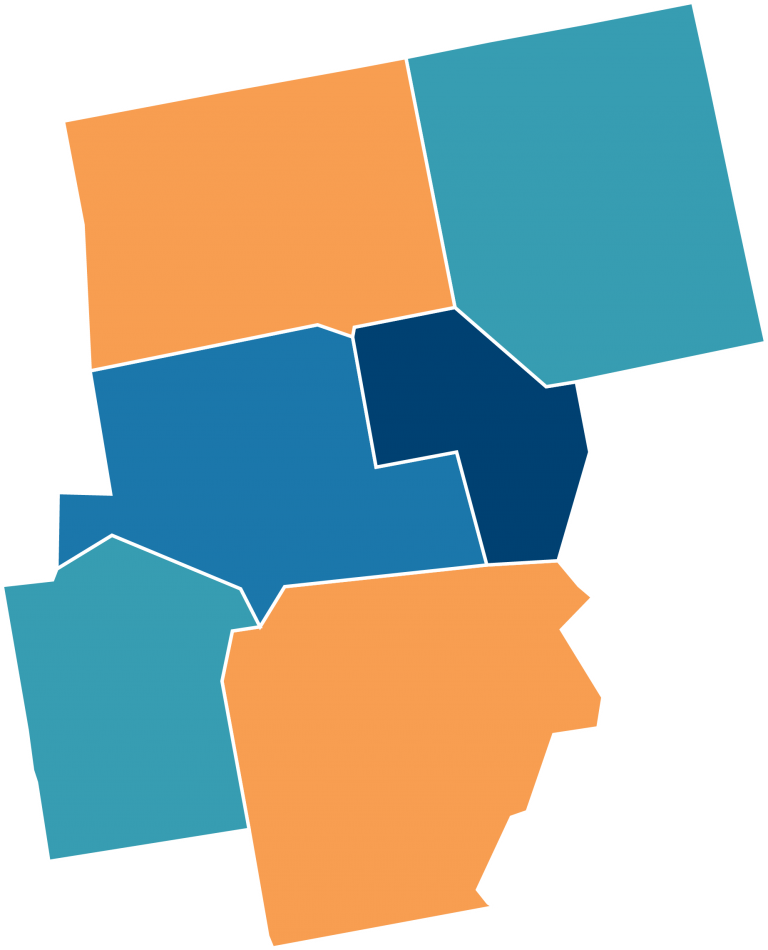
North Central Pennsylvania is a six-county rural region consisting of Cameron, Clearfield, Elk, Jefferson, McKean, and Potter Counties, served by the North Central Pennsylvania Regional Planning and Development Commission (North Central), a nonprofit 501(c)(3) organization designated by the U.S. Economic Development Administration (EDA) as the region’s Economic Development District (EDD).
Cameron
Cameron
Regional Centers: City of Bradford, City of DuBois and the City of St. Marys
Major Transportation Corridors: Interstate 80, U.S. 219, U.S 6 and U.S. 322
Key Industry Sectors: Manufacturing, Healthcare, Natural Resources, Tourism, and Outdoor Recreation
Workforce: Approximately 71,000 workers, with an aging population and median household income levels that reflect the challenges and opportunities of a rural economy.
Natural & Recreation Assets: Allegheny National Forest, Pennsylvania Elk Range; 600,000 Acres of State Forest, over 200,000 Acres of State Game Lands, and hundreds of miles of trails.
targeted industry clusters
North Central Pennsylvania’s economy is driven by key industry clusters that support employment, attract investment, and position the region for long-term economic competitiveness. These industry clusters serve as the foundation for targeted investment, business development, and project prioritization within the CEDS.
Advanced Manufacturing
Includes metal fabrication, materials production, and precision components that support the region’s industrial base.
Natural Resources & Wood Products
Includes forestry, wood product manufacturing, and resource-based industries that remain significant economic drivers.
Healthcare & Life Sciences
Includes hospitals, healthcare services, and related sectors that provide critical employment and essential services.
Outdoor Recreation & Tourism
Includes public lands and visitor destinations that support a growing recreation economy.
Innovation & Advanced Materials
Includes emerging technologies and advanced materials development that create future growth opportunities.
Energy & Utilities
Includes energy production and infrastructure, including natural gas development, power generation, coal, critical minerals and emerging renewable energy investments that contribute to regional economic activity and energy reliability, infrastructure development, and regional competitiveness.
Workforce & education Pipeline
The region’s educational institutions, including K–12 school districts, career and technical centers, community colleges, and universities, play a critical role in developing the workforce needed to support the key industry clusters mentioned above.
Strengthening alignment between education providers and industry needs will be essential to preparing talent pipelines, attracting employers, and retaining a skilled workforce across the six-county region.
K-12 Education
Builds foundational skills, career awareness, and early workforce exposure.
Career & Technical Education
Provides hands-on training aligned with regional industry needs.
Higher Education & Workforce Partners
Supports advanced training, credentials, and upskilling for in-demand careers.
challenges
Many communities across the region have experienced gradual population loss over several decades, reducing the available labor force and increasing competition among employers for workers. Demographic trends indicate that a growing share of the population is approaching retirement age, placing additional pressure on workforce availability, business succession planning, and the long-term sustainability of local services.
While the region benefits from a strong tradition of skilled labor in manufacturing and trades, many employers report difficulty filling positions across sectors including healthcare, manufacturing, construction, and technical occupations. Attracting younger workers, expanding career pathways, and aligning education and training systems with evolving industry needs will be essential to maintaining economic vitality and supporting the expansion of regional industries.
Aging transportation networks, limited broadband access in some rural areas, constrained utility capacity, and gaps in site readiness can slow or prevent new investment. In a geographically large rural region, the cost of maintaining and upgrading infrastructure is often higher per capita, making strategic regional planning and coordinated investment increasingly important to support business development and site readiness.
In many communities across the region, the supply of modern, workforce-ready housing has not kept pace with employer demand. Limited housing options can make it difficult for businesses to recruit and retain employees, particularly younger workers and families seeking to relocate to the region.
Healthcare providers and hospitals serve as both critical employers and essential services that support workforce participation and community stability. Ensuring the availability and accessibility of healthcare services across the region is essential not only for public health outcomes but also for maintaining a productive workforce and sustaining rural communities.
Opportunities
Many communities across the region have experienced gradual population loss over several decades, reducing the available labor force and increasing competition among employers for workers. Demographic trends indicate that a growing share of the population is approaching retirement age, placing additional pressure on workforce availability, business succession planning, and the long-term sustainability of local services.
While the region benefits from a strong tradition of skilled labor in manufacturing and trades, many employers report difficulty filling positions across sectors including healthcare, manufacturing, construction, and technical occupations. Attracting younger workers, expanding career pathways, and aligning education and training systems with evolving industry needs will be essential to maintaining economic vitality and supporting the expansion of regional industries.
Aging transportation networks, limited broadband access in some rural areas, constrained utility capacity, and gaps in site readiness can slow or prevent new investment. In a geographically large rural region, the cost of maintaining and upgrading infrastructure is often higher per capita, making strategic regional planning and coordinated investment increasingly important to support business development and site readiness.
In many communities across the region, the supply of modern, workforce-ready housing has not kept pace with employer demand. Limited housing options can make it difficult for businesses to recruit and retain employees, particularly younger workers and families seeking to relocate to the region.
Healthcare providers and hospitals serve as both critical employers and essential services that support workforce participation and community stability. Ensuring the availability and accessibility of healthcare services across the region is essential not only for public health outcomes but also for maintaining a productive workforce and sustaining rural communities.
The region’s strong manufacturing base continues to evolve, creating opportunities for advanced manufacturing, value-added production, and stronger regional supply chains. Regional manufacturers are increasingly adopting new technologies and automation, creating opportunities for innovation, workforce training, and increased productivity.
The region’s abundant natural resources and public lands also support expanding opportunities in outdoor recreation and tourism. Assets such as the Allegheny National Forest, Pennsylvania’s elk range, and extensive state forest and park lands attract visitors from across the Northeast and provide a foundation for recreation-based economic development. These assets also contribute to the region’s quality of life and can support workforce attraction and retention strategies.
Quality of life and outdoor recreation have increasingly been recognized as a competitive advantage for rural regions. North Central Pennsylvania offers natural beauty, safe communities, and a strong sense of place that appeal to families, entrepreneurs, and remote workers seeking alternatives to urban environments. Investments in housing, recreation, community revitalization, and broadband connectivity can help the region leverage these strengths to attract and retain residents.
Another significant opportunity lies in strengthening regional collaboration. Individual communities may face limited resources and capacity, but when working together across county and municipal boundaries, the region can leverage shared assets, coordinate investment, and pursue larger initiatives that benefit the entire six-county area. The North Central Pennsylvania Regional Planning and Development Commission plays a key role in facilitating this collaboration and aligning regional priorities.